Berluti and The Little Prince

A sensory journey through leather and the Maison’s signature techniques, offering a new way to experience Saint-Exupéry’s work.

Paris, 08 october 2026

For the first time, the Maison has chosen to bring its craftsmanship into dialogue with a major literary work. Why The Little Prince? Because Antoine de Saint-Exupéry’s story belongs to us all. Read in childhood and rediscovered later in life, it speaks across generations of friendship, loyalty, transmission and responsibility. Values that naturally resonate with the Maison, along with a vision of elegance defined less by appearance than by staying true to oneself, to one’s commitments and to the bonds we choose to create.


This encounter inspired the Maison to give material form to the emotions that Saint-Exupéry’s words and drawings continue to evoke. In The Little Prince, bonds are formed through encounters and the process of creating a connection. At Berluti, this idea continues through the artisan’s hand and their relationship with the object, before extending to the bond between the object and the person who wears it.

Discover the collection

Rather than focusing solely on the familiar illustrations of The Little Prince, the Maison returned to the origins of the work through Saint-Exupéry’s sketchbooks, where drawing, writing and thought develop side by side. For the author, drawing was another form of writing. This approach finds a natural echo in the Maison’s craftsmanship, where the line leaves the page to take shape in leather.


In their own way, Berluti’s artisans continued the journey begun by Saint-Exupéry through a creative exploration that gives his work a new material expression. More than a simple interpretation, each creation offers a sensory way to rediscover his work, with leather becoming a new medium for expression.

Writing as a Creative Gesture

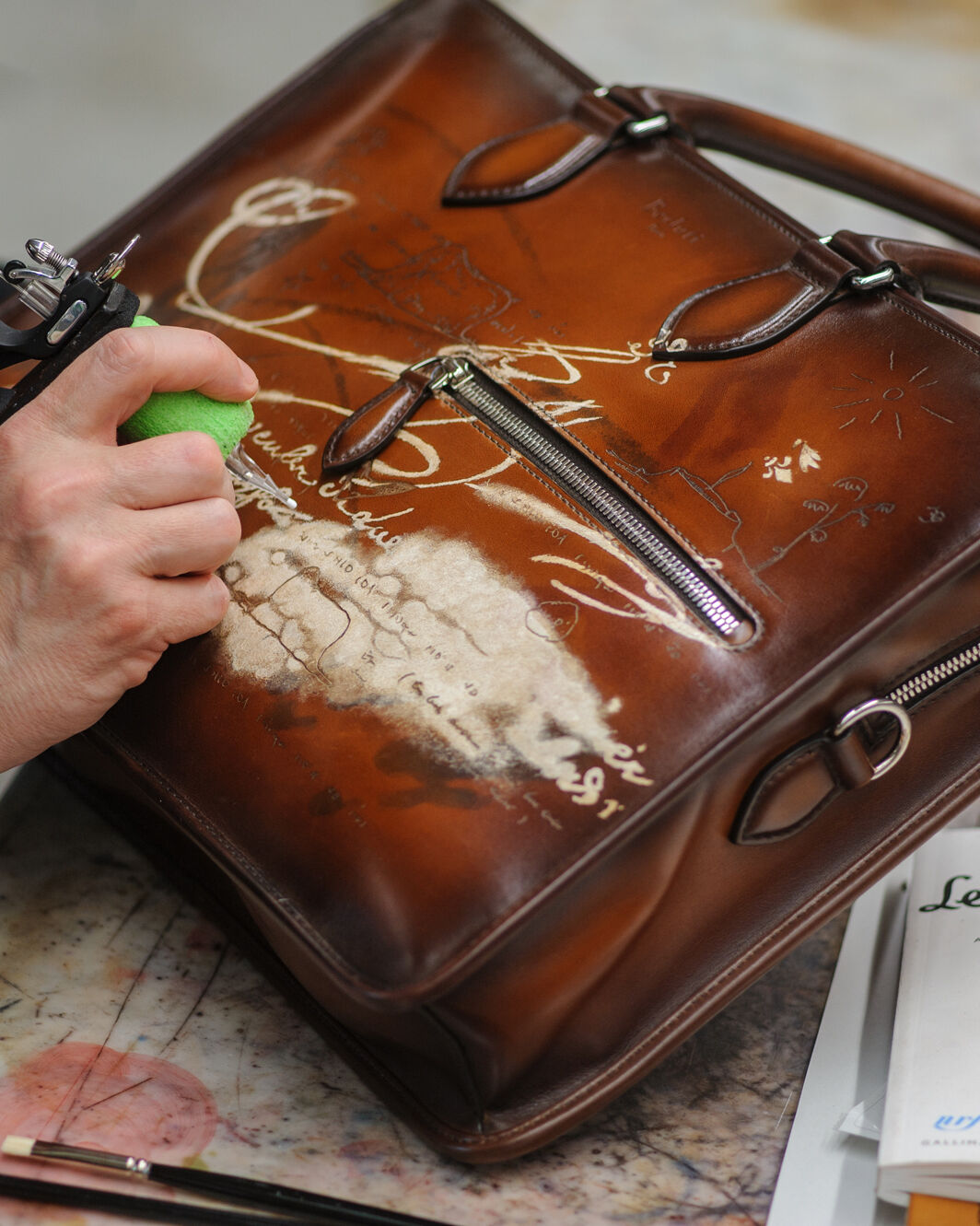
Here, writing is approached as a gesture in its own right, echoing Saint-Exupéry’s creative process and the close relationship between words and drawing. On the Un Jour bag, fragments of text and sketches overlap as they would across the pages of a notebook. The drawings are first applied using laser technology, before the Cacao Intenso patina brings depth and nuance to the leather.

Patina, the Art of Painting on Leather

A signature of the Maison, patina becomes a painterly technique, using variations in colour and intensity to transform the surface of the leather. On the Trois Nuits bag, individual pieces of leather are worked flat like a puzzle before being assembled to reveal an uninterrupted mountain landscape from The Little Prince. Starting from a grey base, colours are applied layer by layer, while tattooing highlights the lines and details of the drawing.

Leather as a Third Language

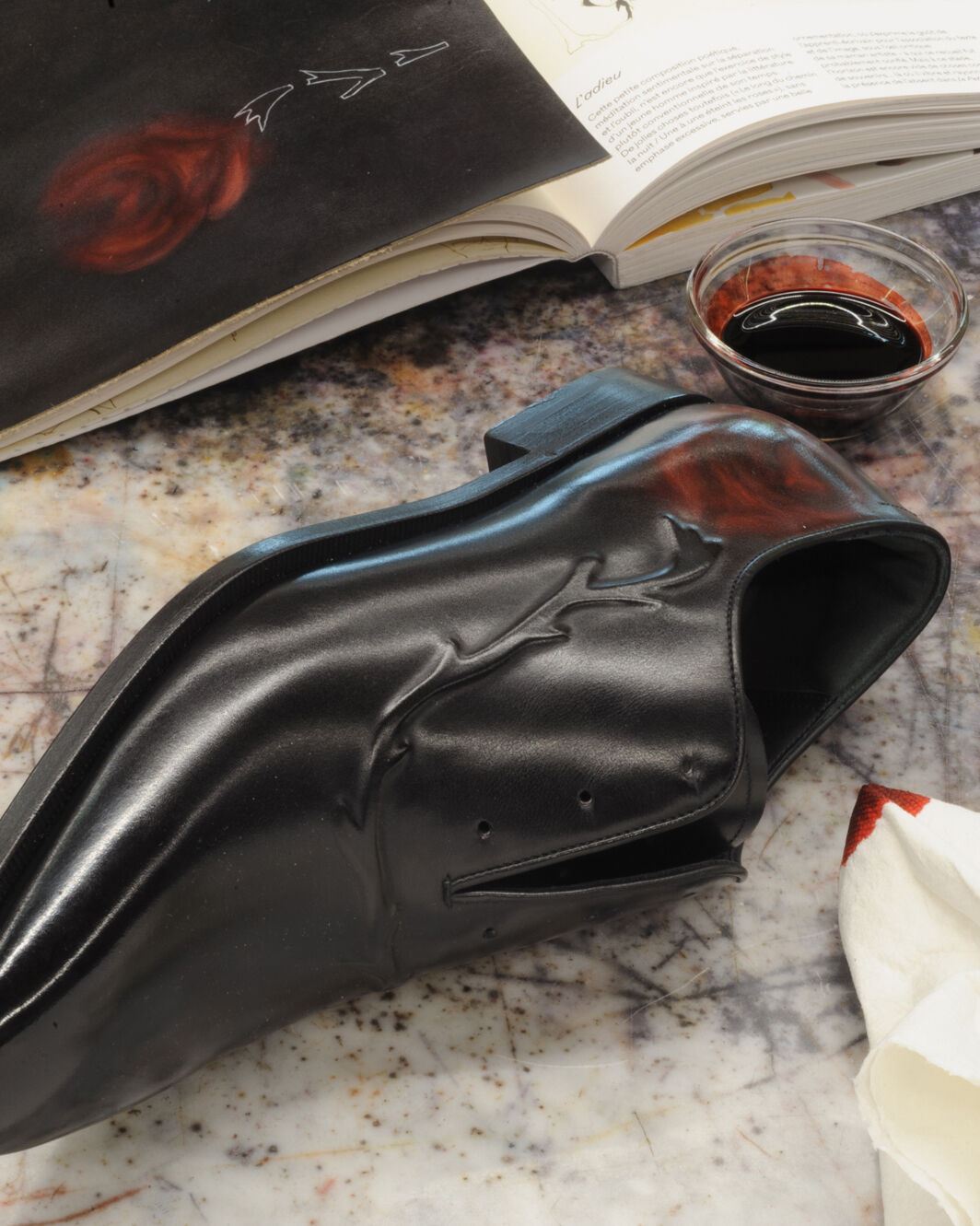
“What is essential is invisible to the eye.” The Maison sought to reveal this invisible dimension by making leather a third language, alongside words and drawing. On the Alessandro shoe, the Little Prince’s rose comes to life through the sotto pelle technique. The motif is placed beneath the leather before the shoe is constructed, then gradually revealed using the osso, a traditional tool, until it emerges in relief. Finally, the Jet Black patina, touched with a hint of Grenat, recalls the colour of the rose’s petals.

Discover more

Shoes

Shoes

Explore the Berluti shoe collection, from iconic styles to the latest creations.

Ready to Wear

Ready to Wear

The Berluti wardrobe brings together pieces designed to move effortlessly through the seasons. Explore the Ready-to-Wear collection.

Leather Goods

Leather Goods

Explore the Berluti leather goods collection, where functionality meets savoir-faire.